

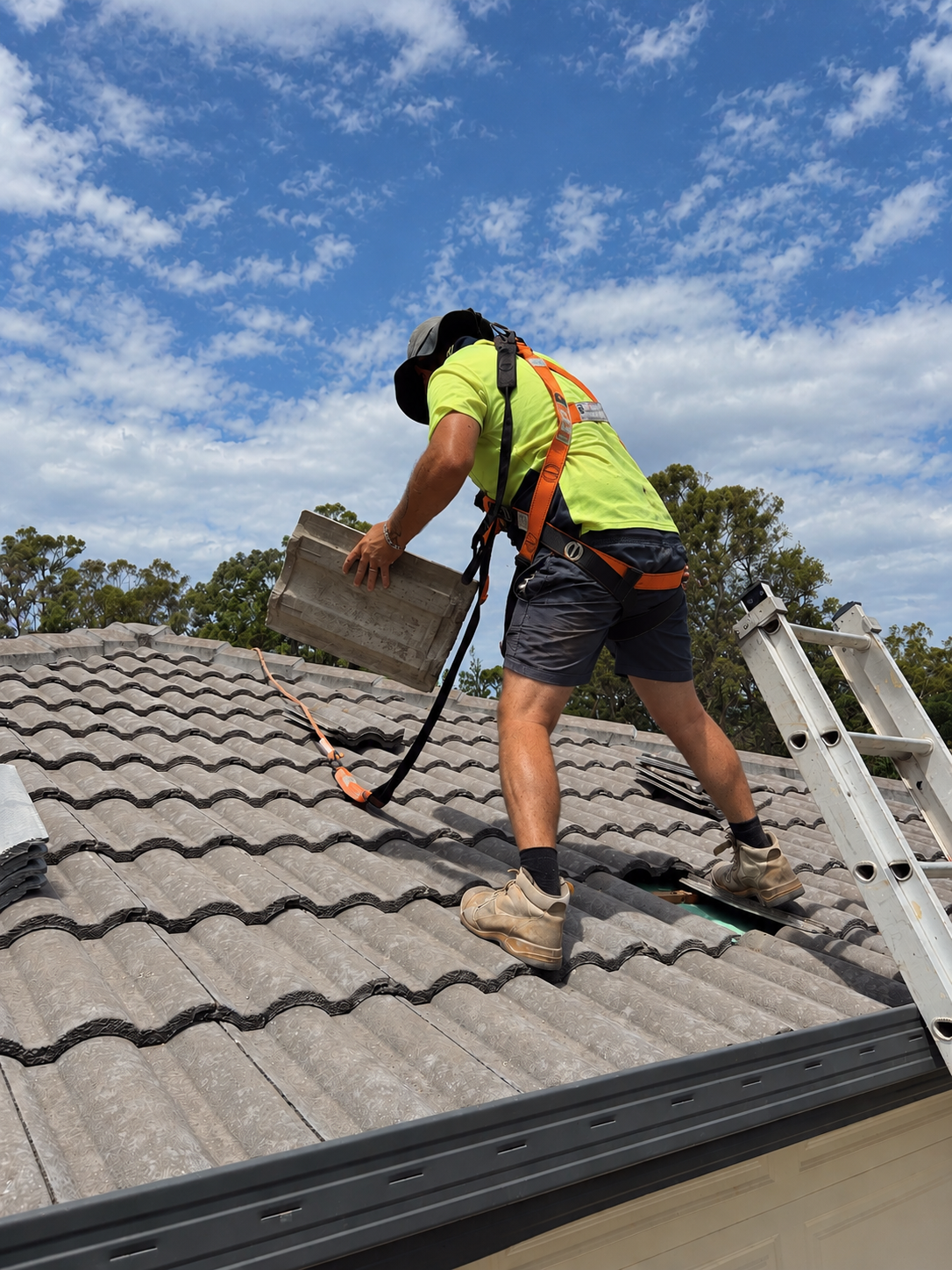
Roof Re-Bedding may be necessary when your roof has cracked mortar, loose ridge caps, water leaks or deteriorating cement beneath the ridge tiles. If you live in Clarence Valley, identifying these warning signs early can help prevent further roof damage and protect your home during heavy rainfall and strong winds.
Understanding when your roof needs attention can save you from unnecessary repairs and unexpected problems.
What Is Roof Re-Bedding and Why Does It Matter?
Roof Re-Bedding involves removing deteriorated bedding mortar beneath ridge and hip tiles and replacing it with fresh mortar to provide a stable foundation.
The bedding holds ridge caps in position, while pointing helps seal and secure their exposed edges. Both components contribute to the condition of a tiled roofing system.
Over time, mortar can deteriorate because of:
-
Regular exposure to rain and sunlight.
-
Temperature changes causing expansion and contraction.
-
Movement within the roofing structure.
-
Ageing materials and previous poor repairs.
-
Strong winds and severe weather conditions.
For homeowners across Clarence Valley, maintaining roof bedding helps reduce the risk of loose ridge tiles and weather-related damage.
5 Warning Signs Your Roof Needs Re-Bedding
Recognising damaged bedding early allows you to arrange repairs before problems become more serious.
1. Cracked or Crumbling Mortar
One of the clearest signs of deteriorating bedding is cracked cement beneath ridge tiles.
As mortar ages, it can become brittle and break into smaller pieces. You might notice fragments collecting in gutters or around your property.
If the bedding has significantly deteriorated, Roof Re-Bedding may be necessary to restore support beneath the ridge caps.
2. Loose or Misaligned Ridge Tiles
Ridge caps should remain properly positioned along your roof’s highest points.
If you notice tiles sitting unevenly, shifting or appearing loose, the bedding underneath may have weakened.
Roof Re-Bedding helps restore a stable base where the existing mortar can no longer support the ridge caps adequately.
3. Water Leaks and Ceiling Stains
Water stains on ceilings or damp patches inside your roof cavity may indicate moisture entering through damaged roofing materials.
However, leaks can also originate from broken tiles, flashing or blocked gutters.
A roofing inspection can determine whether Roof Re-Bedding is required or whether another repair would address the problem.
4. Mortar Falling Into Gutters
Small pieces of mortar collecting in your gutters can indicate that bedding or pointing is breaking down.
While occasional debris does not automatically mean your entire roof needs repairs, repeated mortar loss deserves attention.
A professional can assess whether the deterioration is isolated or widespread.
5. Visible Gaps Beneath Ridge Caps
Gaps between ridge tiles and the surrounding roof surface may indicate missing or deteriorated bedding.
These openings can allow wind-driven rain to enter vulnerable sections of the roof.
Where the bedding has failed, Roof Re-Bedding can help restore the ridge caps’ support and allow damaged pointing to be renewed.
Roof Re-Bedding vs Roof Repointing: What’s the Difference?
Many homeowners confuse these two roofing services because they often form part of the same repair.
Roof re-bedding involves replacing the mortar foundation beneath ridge caps.
Roof repointing involves renewing the material along the ridge cap edges to help seal and secure them.
The correct treatment depends on the existing bedding’s condition.
If the bedding remains sound but the pointing has cracked, repointing alone may be sufficient. However, when mortar beneath the ridge caps has deteriorated, Roof Re-Bedding may be required before new pointing is applied.
A proper inspection helps avoid replacing materials that remain in satisfactory condition.
Why Roof Re-Bedding Matters in Clarence Valley
Homes throughout Grafton, Maclean, Yamba and surrounding Clarence Valley communities can experience heavy rainfall, strong winds and prolonged exposure to sunlight.
These conditions can contribute to the gradual deterioration of roofing materials.
The NSW State Emergency Service recommends checking roofs for damage, repairing loose tiles and addressing leaks when preparing properties for severe weather.
Regular inspections can help you identify issues before significant water damage develops.
For older tiled homes, Roof Re-Bedding may form part of necessary maintenance when ridge mortar has deteriorated.
However, not every ageing roof requires complete bedding replacement.
How Is Roof Re-Bedding Carried Out?
A professional roofing contractor generally follows several steps to restore deteriorated bedding.
-
Inspect the roof: Assess ridge caps, existing bedding, pointing and nearby tiles.
-
Remove damaged materials: Carefully lift affected ridge caps and remove deteriorated mortar.
-
Prepare the surface: Clean the relevant areas and check for damaged tiles.
-
Apply new bedding: Install suitable mortar to provide a stable foundation.
-
Reposition ridge caps: Align and secure the tiles correctly.
-
Complete pointing: Apply compatible pointing material where required to finish the repair.
Roof Re-Bedding should be completed using appropriate materials and safe working methods.
In NSW, roof tiling work includes bedding and pointing. The NSW Government’s roof tiling licensing guidance explains the applicable licensing requirements.
Can You Prevent Roof Bedding Damage?
Although mortar naturally deteriorates over time, regular maintenance can help identify problems early.
You can protect your tiled roof by:
-
Checking for visible changes from ground level.
-
Keeping gutters and downpipes clear.
-
Watching for ceiling stains after heavy rainfall.
-
Arranging inspections after significant storms.
-
Addressing broken or displaced tiles promptly.
Avoid climbing onto your roof to inspect damaged ridge caps yourself. Working at heights creates serious safety risks.
Roof Re-Bedding is not always necessary when minor cracks appear. An inspection can establish whether the mortar remains sound or needs replacement.
When to Call a Professional
If you notice crumbling mortar, loose ridge caps or recurring leaks, arrange a professional roofing inspection.
Harro’s Roofing can assess your roof’s condition and help determine whether Roof Re-Bedding, repointing or another roofing repair is appropriate.
A detailed assessment should identify the cause of deterioration rather than simply covering visible cracks.
If your Clarence Valley property has an ageing tiled roof, contact Harro’s Roofing to discuss your concerns and arrange an assessment.
Conclusion
Roof Re-Bedding helps restore deteriorated mortar beneath ridge caps and supports the ongoing condition of tiled roofing systems.
Cracked bedding, loose tiles, falling mortar and water leaks are warning signs that deserve attention. However, professional inspection is the best way to determine which repairs are necessary.
For homeowners in Clarence Valley, Harro’s Roofing can help identify roofing problems and discuss suitable repair options before further damage develops.
Frequently Asked Questions
How do I know if my roof bedding is damaged?
Common signs include cracked mortar, loose ridge caps, visible gaps and cement fragments in gutters. A roofing inspection can confirm the extent of damage.
Is Roof Re-Bedding necessary if my roof is not leaking?
Not always. However, deteriorated mortar can weaken ridge cap support even before leaks appear. Early assessment helps determine whether repairs are needed.
Can roof repointing fix damaged bedding?
Repointing cannot replace severely deteriorated bedding. If the mortar foundation has failed, it generally needs replacement before new pointing is applied.
How long does Roof Re-Bedding last?
Its lifespan depends on workmanship, materials, roof movement and weather exposure. Regular inspections help identify deterioration before major repairs become necessary.

