

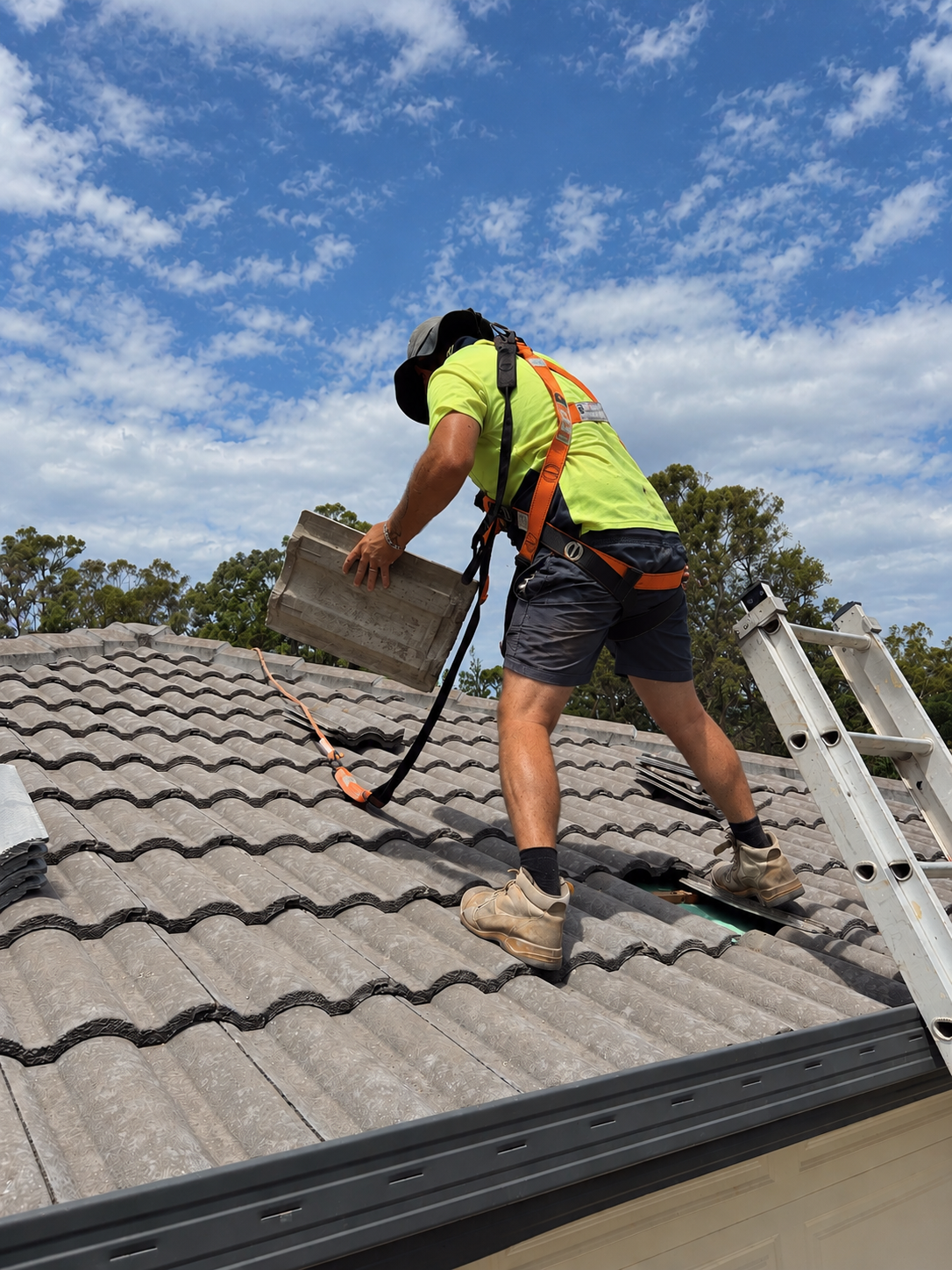
Roof maintenance includes inspecting roofing materials, flashings, gutters, downpipes, valleys, sealants and roof penetrations, then clearing debris and fixing minor defects before they become larger problems. For Grafton homeowners, regular checks can help identify cracked tiles, loose metal sheets, blocked drainage and early signs of water entry.
What Is Included in Roof Maintenance?
A thorough roof maintenance visit looks at the whole roofing system, not only the surface visible from the ground. The aim is to find wear, movement, corrosion, blockages and possible water-entry points.
Typical checks may include:
- Inspecting tiles, metal sheets and visible roof surfaces
- Checking ridge capping, flashings and roof valleys
- Looking around vents, skylights and other penetrations
- Clearing leaves and debris from drainage areas
- Checking gutters, downpipes and stormwater flow
- Looking for loose, cracked, missing or corroded components
- Checking for signs of leaks or moisture entry
- Inspecting sealants and fasteners for deterioration
The exact work depends on the roof type, age, pitch, condition and surrounding environment.
Roof Surface Checks
The visible roof covering is one of the first areas checked during roof maintenance. On tiled roofs, this means looking for cracked, chipped, slipped or missing tiles and deterioration around ridge capping.
On metal roofs, checks may focus on loose fasteners, corrosion, damaged sheets and movement around joins. Small defects can let wind-driven rain enter the roof space even when the roof looks generally sound from the street.
Flashings, Valleys and Roof Penetrations
Flashings help direct water away from vulnerable joins around walls, chimneys, skylights and vents. Roof maintenance should check whether these areas are loose, damaged, corroded or poorly sealed.
Valleys also need attention because they carry large amounts of rainwater. Leaves, twigs and dirt can slow drainage and cause water to back up during heavy rainfall.
Gutters and Downpipes
Gutters and downpipes are part of the roof drainage system. Blocked gutters can overflow into eaves or roof cavities, while damaged downpipes can direct water towards walls and foundations.
The NSW SES guidance on preparing your home recommends clearing gutters, downpipes and drains regularly and repairing loose tiles, metal sheets and screws before storms.
For Grafton properties with nearby trees, roof maintenance may need more frequent debris checks. Leaves and seed pods can collect quickly in valleys and gutter corners.
Signs of Leaks and Moisture
Water stains on ceilings are an obvious warning sign, but leaks can start before visible staining appears. Damp insulation, discoloured timber, mould, musty smells or water marks in the roof space may point to moisture entry.
During roof maintenance, the likely source should be traced rather than simply treating the visible stain. Water can travel along rafters, battens or insulation before appearing inside, so the entry point may be some distance away.
How Often Should Roof Maintenance Be Done?
There is no single schedule that suits every property. Roof age, material, tree cover, previous repairs and exposure to severe weather all affect how often checks are needed.
A practical approach is to inspect from the ground regularly and arrange a closer assessment when you notice broken materials, overflowing gutters, rust, sagging sections or signs of water entry. Roof maintenance is also worth considering after significant storms or when branches have struck the roof.
What Can You Safely Check Yourself?
You can spot many warning signs without climbing onto the roof. Walk around the property and look for missing tiles, lifted metal sheets, overflowing gutters, loose flashing, sagging sections or debris build-up.
Avoid climbing onto a roof simply to inspect it. SafeWork NSW guidance on working at heights explains that falls from roofs and ladders are a serious safety risk and that work at height requires proper controls.
Roof Maintenance After Storms in Grafton
After strong winds or heavy rain, inspect your property from a safe position. Look for displaced roofing, fallen branches, damaged gutters and new leaks.
Do not climb onto a wet, damaged or unstable roof. If a tree or large branch has struck the structure, keep clear because the roof may have been weakened even when damage is not obvious.
When to Call a Professional
Call a professional when roof maintenance involves working at height, replacing damaged materials, tracing persistent leaks, repairing flashings or assessing structural concerns. You should also arrange help if you see widespread corrosion, multiple broken tiles, sagging areas or repeated water entry.
Harro’s Roofing can inspect roofing systems in Grafton and identify maintenance or repair work that needs attention. If you are unsure whether a visible issue is minor or likely to worsen, arrange an assessment instead of climbing onto the roof yourself.
Conclusion
Roof maintenance covers more than clearing leaves or replacing an occasional tile. It includes checking roof coverings, flashings, valleys, drainage, penetrations, fasteners and signs of moisture so defects can be dealt with before they spread.
For Grafton homeowners, regular roof maintenance is useful after storms, heavy rain or visible changes to the roof. If you have noticed leaks, damaged roofing or blocked drainage, contact Harro’s Roofing for an inspection and practical advice.
FAQs
What does roof maintenance include?
Roof maintenance usually includes checking roof coverings, flashings, valleys, gutters, downpipes, penetrations, sealants and fasteners. It may also include clearing debris and identifying minor damage or leaks.
Can I inspect my own roof?
You can carry out a basic visual inspection from the ground and check ceilings for moisture. Avoid climbing onto the roof unless you have the correct equipment, training and safety controls.
Should I check my roof after a storm?
Yes. Check from a safe location for missing tiles, lifted sheets, damaged gutters, fallen branches and leaks. Arrange professional help if damage requires roof access.
Why do gutters matter to roof condition?
Gutters move rainwater away from the roof and building. When blocked, water can overflow into eaves, roof cavities or around exterior walls, increasing the risk of moisture damage.

