Roof replacement Grafton – quick answer: A roof replacement in Grafton usually costs around $15,000–$30,000 for a standard single-storey home re-roofed in Colorbond, and roughly $15,000–$35,000+ for a new tile roof or a tile-to-Colorbond conversion. Most homes take 3–7 working days, weather permitting. The final price depends on roof size, pitch, access, the material you choose, and whether battens, sarking, gutters or asbestos removal are needed. The only way to get an accurate figure is an on-site roof inspection and written quote.
If your roof in Grafton, South Grafton or anywhere in the Clarence Valley keeps leaking, is rusting through, or has been patched more times than you can count, you have probably started wondering whether it is time for a full roof replacement. This roof replacement Grafton guide answers the questions local homeowners ask us most – what it costs, how to tell if you really need a new roof, which material suits our local climate, and what the job actually involves – so you can make a confident decision before you call anyone.
It is written by the team at Harro’s Roofing, a local roofing contractor based in Grafton that carries out roof replacements, restorations, repairs and guttering across the Clarence Valley.
How much does a roof replacement cost in Grafton?
For most Grafton homes, a full roof replacement falls somewhere between $15,000 and $35,000. Across NSW, re-roofing is commonly priced at roughly $90–$200 per square metre, with the rate moving up for steep, complex or two-storey roofs. Regional pricing in the Clarence Valley is generally in line with, or slightly below, metro rates – but access, disposal and the amount of structural work always make the biggest difference.
| Type of roof replacement | Typical price range (single-storey home) | What affects the price |
|---|---|---|
| Metal / Colorbond re-roof (old metal off, new Colorbond on) | $15,000 – $30,000 | Roof area, pitch, number of hips and valleys, new battens and sarking |
| Tile to Colorbond conversion | $18,000 – $35,000 | Tile removal and disposal, batten changes, tie-down upgrades, flashings |
| Tile roof replacement (new concrete or terracotta tiles) | $15,000 – $35,000+ | Tile choice, roof complexity, rebedding and pointing of ridge caps |
| Asbestos (fibro/“super six”) roof replacement | Roof cost + licensed removal | Area of asbestos, licensed removalist fees, disposal |
| Two-storey or steep roofs | Add roughly 20–50% | Scaffolding, edge protection, slower installation |
These ranges are indicative only, based on 2026 NSW industry price guides. They are not a quote – every roof is different.
What makes a roof replacement more expensive?
- Roof size and shape – more square metres, hips, valleys, dormers and skylights mean more material and labour.
- Pitch and height – steep or two-storey roofs need more safety equipment and scaffolding.
- Access – tight blocks, sloping sites and limited space for bins or cranes add time.
- Structural repairs – rotten battens, damaged timber or sagging sections found once the old roof is off.
- Extras – sarking or insulation blanket, new gutters, downpipes, fascia, whirlybirds and gutter guard.
- Asbestos – many older Grafton homes have fibro roofing or eaves that require licensed removal.
Is $30,000 too much for a roof? Not necessarily. For a larger, steep or two-storey Grafton home, or a tile-to-Colorbond conversion with new gutters and sarking, $30,000 can be a fair price. The key is to compare quotes that list the same scope – removal, disposal, battens, sarking, flashings, gutters and clean-up – rather than just the bottom line.
How do I know if my roof needs replacing or just repairing?
Your roof probably needs replacing, not repairing, when problems are widespread rather than isolated. If leaks keep coming back after repairs, if the metal is rusted through in several places, or if the roof is near the end of its expected lifespan, a replacement is usually the better long-term investment.
8 signs your Grafton roof may need replacing
- Recurring leaks in different rooms, especially after heavy summer storms.
- Rust holes or heavy corrosion on metal sheets, screws or flashings.
- Many cracked, slipped or porous tiles across large areas of the roof.
- Sagging or uneven rooflines, which can point to failing battens or structure.
- Water stains, mould or damp insulation in the ceiling space.
- Constant repair bills – you are paying for fixes every year.
- An ageing roof – older galvanised iron and early concrete tile roofs are often well past their best.
- Storm or hail damage that affects a large section of the roof, not just a few tiles.
If only a few tiles are broken or a single section is leaking, a targeted roof leak repair, re-bedding or repointing may be all you need. If the roof is structurally sound but tired-looking, a roof restoration can add years of life for less money. An honest inspection should tell you which option actually makes sense.
Repair vs restore vs replace – at a glance
| Option | Best when… | Relative cost |
|---|---|---|
| Roof repair | Damage is isolated – a few tiles, one leak, a loose flashing | Lowest |
| Roof restoration | Structure is sound, but tiles/metal need cleaning, rebedding, pointing and coating | Moderate |
| Roof replacement | Widespread deterioration, rust-through, repeated leaks, end of lifespan | Highest, but longest-lasting |
Colorbond or tile: which is the best roof replacement for Grafton homes?
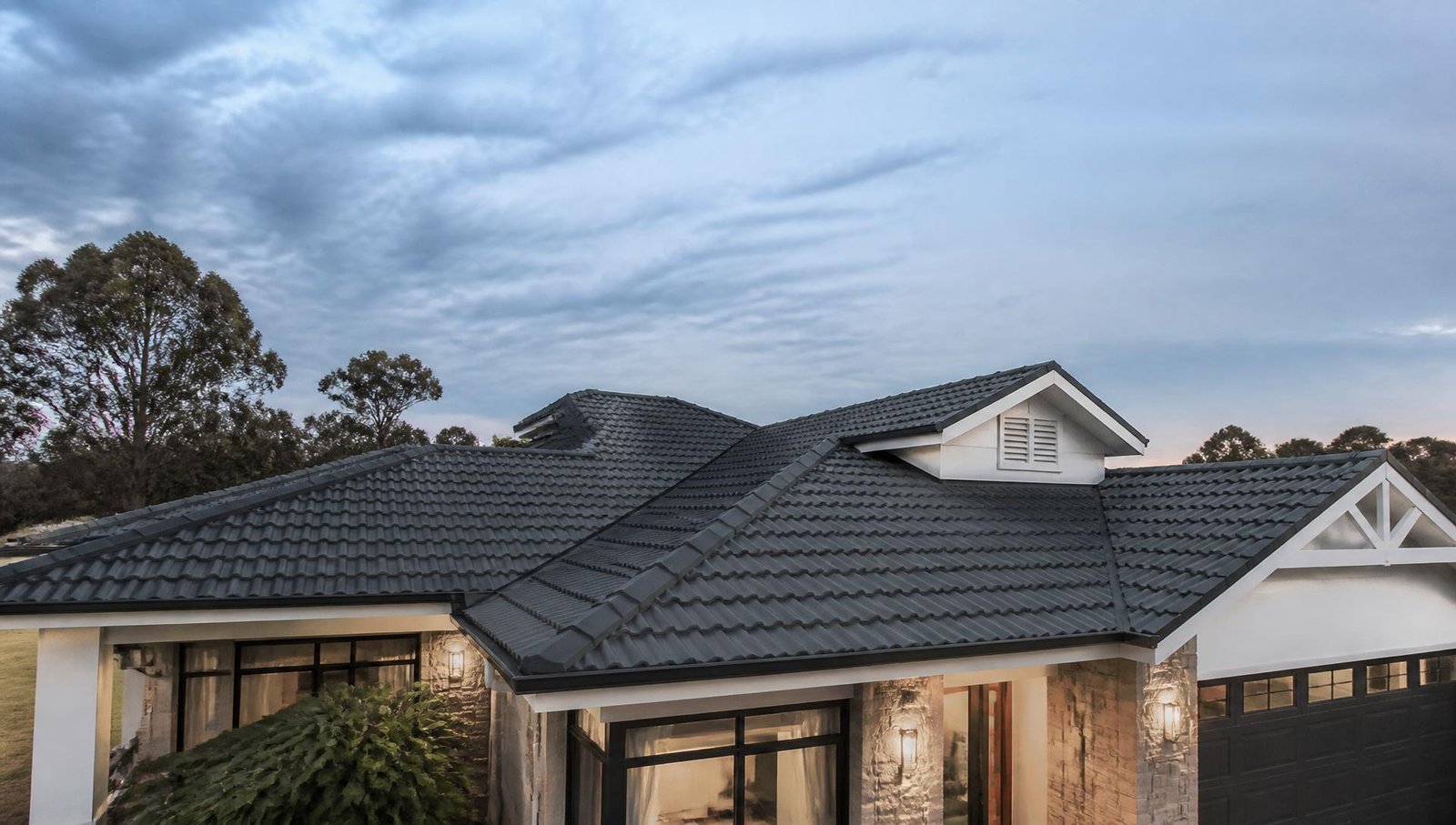
For most Grafton and Clarence Valley homes, Colorbond steel is the most popular roof replacement choice because it is lightweight, handles heavy rain well, has fewer joints for water to get through, and needs very little maintenance. Tile remains a great option if you want to keep the look of your home, match the streetscape, or prefer the thermal mass and quiet of tiles.
| Colorbond / metal roof | Concrete or terracotta tile roof | |
|---|---|---|
| Weight | Very light – less load on the frame | Heavy |
| Leak risk | Low – large sheets, fewer joins | More joins; ridge capping needs maintenance |
| Storm & hail | Can dent in severe hail, but rarely leaks as a result | Tiles can crack in hail or when walked on |
| Maintenance | Low | Periodic rebedding, repointing and cleaning |
| Heat | Cool with light colours, sarking and insulation | Good thermal mass |
| Rainwater tanks | Well suited to rainwater harvesting | Suitable, but more debris from ageing tiles |
| Look | Modern, wide colour range | Traditional, classic character |
Grafton’s hot, humid summers, heavy downpours and occasional hailstorms are a big part of why many local homeowners choose Colorbond roof replacement. Choosing a lighter colour, adding sarking or an insulation blanket, and ventilating the roof space can make a noticeable difference to summer comfort. If you would rather keep a tiled look, see our tile roof replacement service.
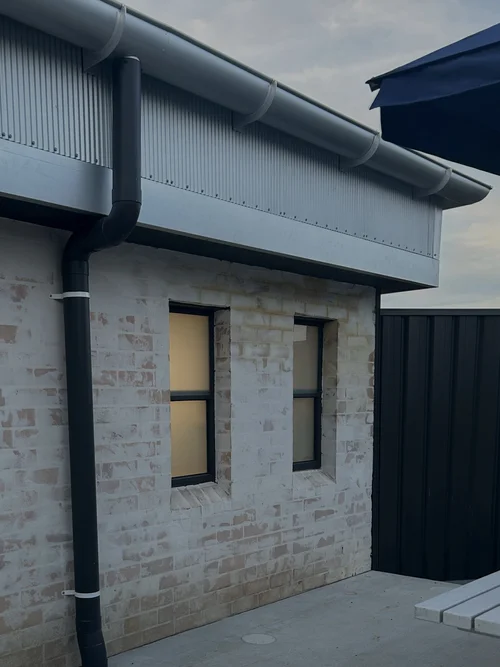
Can I replace my tile roof with Colorbond in Grafton?
Yes – converting a tiled roof to Colorbond is one of the most common roof replacements in the Clarence Valley. The tiles are removed and disposed of, the roof frame is checked, tile battens are replaced with metal roofing battens at the correct spacing, sarking is installed, and the new sheets, flashings and ridge capping are fixed down to meet the required wind rating.
Because a metal roof is much lighter than tiles, it is fixed differently – the tie-down of the battens to the frame needs to suit a sheet roof, not a tiled one. That is why a tile-to-metal conversion should always be done by a licensed roofer who understands the structural side of the job, not just the sheeting. If your home is in a heritage area, it is also worth checking with Clarence Valley Council before changing roof materials.
What does a full roof replacement involve?
A full roof replacement typically follows these steps:
- Inspection and quote – we get up on the roof and into the roof space where possible, measure up, and give you a written, itemised quote.
- Planning – choosing your material and colour, booking bins/scaffolding and checking the weather forecast.
- Safety set-up – edge protection or scaffolding is installed.
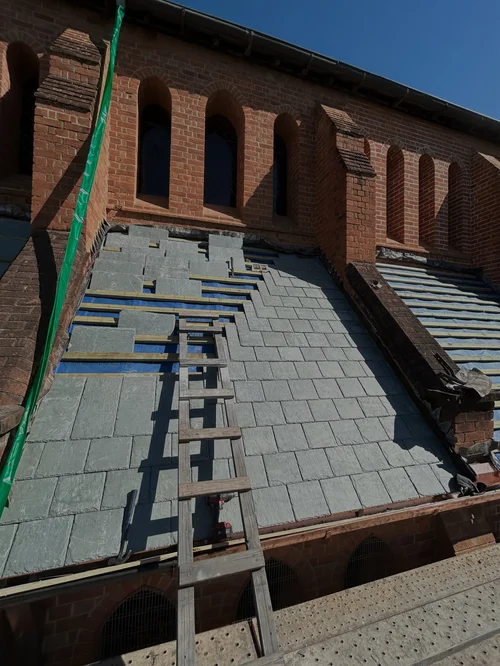
- Removal – the old roof is stripped section by section so your home is never left open to the weather longer than necessary.
- Frame and batten check – rotten or damaged timbers are repaired and battens replaced or upgraded.
- Sarking and insulation – installed under the new roof to reduce heat, condensation and dust.
- New roof installation – sheets or tiles, flashings, valleys, ridge capping, and any new gutters and downpipes.
- Clean-up and final inspection – debris removed, magnetic sweep for screws, and a final check of all flashings and penetrations.
Find out more on our full roof replacement in Grafton page.
How long does a roof replacement take?
Most single-storey homes in Grafton take around 3–7 working days to re-roof, depending on size, complexity and weather. Larger homes, two-storey roofs, tile-to-metal conversions or jobs that need structural repairs or asbestos removal can take longer. Summer storms are common in the Clarence Valley, so a good roofer will only open up as much of the roof as can be sealed again that day.
How long does a new roof last?
A properly installed Colorbond roof can be expected to last several decades, while quality concrete and terracotta tiles can last 50 years or more – although ridge capping, pointing and flashings on tiled roofs need maintenance along the way. Lifespan depends heavily on installation quality, the right product for your location (coastal areas such as Yamba, Iluka and Maclean may need a more corrosion-resistant product), and regular maintenance such as clearing gutters and valleys.
Do I need approval, a licence or insurance to replace a roof in NSW?
In most cases, replacing a roof like-for-like on a house does not need a development application, but there are important rules homeowners should know:
- Licensing: In NSW, residential building work valued at more than $5,000 (including labour and materials) must be done by a contractor holding the correct licence. You can check a roofer’s licence on the NSW Government licence register.
- Written contract: Work between $5,000 and $20,000 needs a written small jobs contract; work over $20,000 needs a full home building contract.
- Home Building Compensation (HBC) insurance: Required for residential building work over $20,000 (including GST), unless exempt. Your contractor should give you a certificate before work starts or any deposit is taken.
- Asbestos: Removing more than 10m² of non-friable (bonded) asbestos, or any friable asbestos, must be done by a licensed asbestos removalist (see asbestos.nsw.gov.au). Many pre-1990 Clarence Valley homes contain asbestos in fibro roofing or eaves.
- Council: Changing roof material in a heritage conservation area, or changing the roof shape, may need Clarence Valley Council approval.
Does home insurance cover roof replacement?
Home insurance usually covers roof damage caused by a sudden insured event such as a storm, hail or a falling tree, but it generally does not cover a roof that has simply worn out, rusted or deteriorated over time. If your roof has been damaged in a storm, take photos, make it safe, and contact your insurer as soon as possible. A roofer’s inspection report can help support your claim.
How to choose a roofer for your Grafton roof replacement
- Check their licence on the NSW Government register and ask for proof of public liability and HBC insurance (for jobs over $20,000).
- Ask for an itemised written quote that includes removal, disposal, battens, sarking, flashings, gutters and clean-up.
- Ask what product and colour will be used and what manufacturer and workmanship warranties apply.
- Look at photos of recent local work and read Google reviews.
- Be wary of very low quotes, cash-only deals or door-knockers after storms.
- Choose a local business that will still be around if you ever need them to come back.
Thinking about a roof replacement in Grafton?
Harro’s Roofing provides free roof inspections and quotes for roof replacement Grafton-wide, plus South Grafton, Ulmarra, Coutts Crossing, Maclean, Yamba, Iluka, Lawrence and across the Clarence Valley. Call 0459 544 403 or request a free quote online.
Roof replacement Grafton: frequently asked questions
What is the cheapest way to replace a roof?
For most homes, a like-for-like Colorbond metal re-roof is the most cost-effective full replacement. If the roof structure and tiles are still in reasonable condition, a roof restoration or targeted repairs may be cheaper than replacing the whole roof.
How much does a Colorbond roof cost for a 3-bedroom house?
A typical single-storey 3-bedroom home in NSW generally costs around $15,000–$30,000 to re-roof in Colorbond, depending on roof size, pitch and whether battens, sarking and gutters are also replaced.
Is it worth replacing a tile roof with Colorbond?
For many Clarence Valley homes, yes. Colorbond is lighter, has fewer joins for water to get through, suits rainwater tanks and needs less maintenance than tile. It is especially worth considering if your tiles are porous, cracked or the ridge capping keeps failing.
Can you replace a roof in the rain?
Roofers do not open up a roof in wet weather. The old roof is removed in sections and each section is covered or sealed the same day, so work pauses during rain and resumes once it is dry and safe.
Do I need to move out during a roof replacement?
Usually not. Most homeowners stay home during a roof replacement, although it can be noisy and dusty in the ceiling space. Covering items in the roof space and clearing a path around the house helps the job run smoothly.
What is the most expensive part of replacing a roof?
Labour and roofing materials are the largest costs. Unexpected structural repairs, scaffolding for steep or two-storey roofs, and asbestos removal can add significantly to the price.
Which areas does Harro’s Roofing service for roof replacements?
Harro’s Roofing is based in Grafton and carries out roof replacements across the Clarence Valley, including Grafton, South Grafton, Ulmarra, Coutts Crossing, Lawrence, Maclean, Yamba and Iluka, and surrounding areas between Evans Head and Coffs Harbour.

